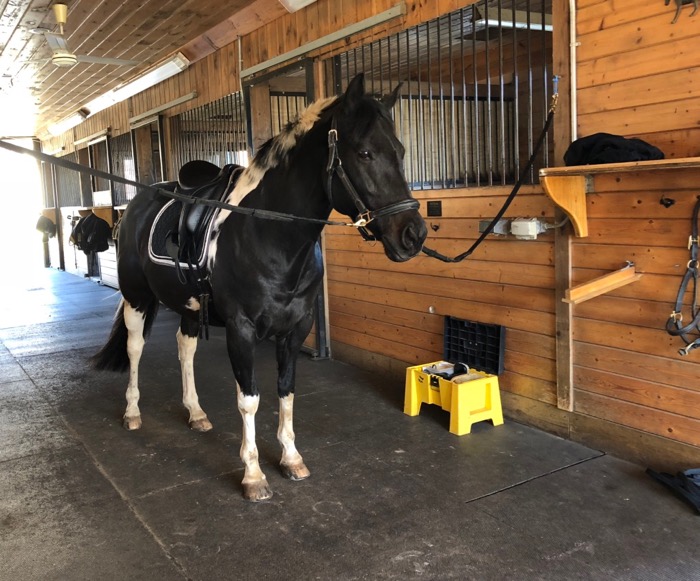
NO HORSE SHOULD EVER BE TIED IN A CROSS TIE ~
Howdy Friends! And I Replied: Sorry for the delay, I just saw your response, regarding, “Please explain what cross-ties do to harm a horse’s posture”
First please let me apologize, I did not mean to insult or offend when I commented, “No horse should ever be in a cross-tie ever.” But it is my true belief and honest recommendation. Please accept my apology.
As I said, I spent decades learning and promoting true equine posture and correct, healthy body carriage. I even traveled the country some conducting educational clinics, for equine posture. (Started with Equine Assisted Therapy Barns) I taught a little, learned a lot from folks and horses I met along the way.
It is my observation that many horse folks don’t know what correct, healthy body carriage for a horse is. It’s not their fault, folks learn what they live and are taught. But they can and do embrace better when they discover it.
All bad posture in our horses is ‘man driven,’ by what we do to, and with our horses. The GOOD news is, it can ALL be corrected. Not with monumental changes in our conduct, but subtle little things that put the horse first. In most cases we don’t need to add to the list of things we do – We just need to adjust they way we do the things we do, from posture breaking, to posture strengthening. That list may be long, or short, but every little thing matters. From putting on a halter, leading, feeding, tacking up, of course tack fit, riding, our posture in the saddle and things related. And of course we may need to learn what “correct for the horse” great posture and movement looks like.
Back to what was my first offense, “No horse should ever be in a cross-tie ever” And your question, “How does that effect posture?”
First and foremost it can (and very often does) damage the Axis in the horse’s neck. (I can hear the objections already, have countless times) BUT the AXIS VERTEBRA is very, very, delicate, and even the slightest damage causes the beginning of arthritis there. Even lunging back just one time against a tied rope. Or a jerk on the halter …People like to deny that but it’s true.
The Axis is second cervical vertebra (c2) in the horse’s neck, located behind the Atlas (c1) which connects the skull. It is this pivot point which allows the horse to rotate its head from side to side. The Atlas pivots on this Axis, with this joint allowing for the majority of the horse’s cervical rotation. Arthritis here also limits the horses ability to nod up and down.
When this area becomes stiff, frozen, or even a little impaired by arthritis (which will only continue to grow) It transfers the movement back through the neck, into the shoulders rotating the Thoracic Sling in ways it is not designed to move. And begins to stretch the Thoracic sling causing more weight to be born on the forehand. And as that happens, more weight continues to be born on the forehand breaking down more posture, leading to more issues often not traced back to the culprit. Equine posture matters.
Yes breakdown can take a long time, horses are tough. But it will have an effect. Often poor posture is misunderstood for lack of willingness, a training need – When what it really is is “The horse just can’t” That’s why I’m a posture fanatic.
And this is why cross-ties are bad for horses.
~ Gitty Up, Dutch.